


Child Safe Carpet Products for Family Homes
- Carl

- 1 day ago
- 6 min read
A dropped yoghurt pouch, muddy football socks and a felt-tip lid left loose on the floor can turn a family carpet into a testing ground in minutes. Choosing child safe carpet products is not about settling for weak cleaning. It is about getting real results without filling the room with harsh fumes, leaving sticky residue behind or using a treatment that does not suit the people who spend most time close to the floor.
For busy households, the best approach is usually simple: use the mildest effective product for the mark, follow the label precisely and avoid treating every spill with the same heavy-duty bottle. A clean carpet should feel fresh and comfortable for family life, not smell strongly of chemicals for days afterwards.
What makes carpet products child safe?
No cleaning product is completely risk-free if it is swallowed, sprayed into eyes or used incorrectly. “Child safe” should mean that a product has been designed and used with everyday household safety in mind: clear instructions, suitable dilution, sensible ventilation and no unnecessary harsh ingredients.
Look beyond the front-label claims. A product may say it is natural, plant-based or non-toxic, but that does not automatically mean it is right for every carpet, every stain or every child. Fragrance can also be an issue for children with sensitivities, while essential oils are not always suitable around babies or pets. The safest choice depends on who is in the home, the type of carpet and what you need the product to remove.
A reliable product should provide clear guidance on where it can be used, how long it needs to stay on the carpet and whether it needs rinsing or blotting afterwards. If the instructions are vague, or the product promises to remove every stain instantly, treat that as a warning sign rather than a selling point.
Child safe carpet products worth keeping at home
You do not need a cupboard full of cleaners. A small, sensible kit will deal with most household accidents while reducing the temptation to mix products or over-apply them.
A mild, low-odour spot cleaner is useful for food, drink and everyday marks. Choose one made specifically for carpets and upholstery, rather than a general-purpose spray. Carpet fibres, dyes and backing materials can react differently to household cleaners designed for kitchens or bathrooms.
For fresh liquid spills, clean white absorbent cloths and plain lukewarm water are often the best first response. Blot from the outside of the spill towards the centre. Rubbing can push the stain deeper into the pile, spread it wider and roughen delicate fibres.
An enzyme-based treatment can be helpful for biological accidents such as milk, vomit or pet mess. These products work by breaking down the organic material causing the stain and odour. They need enough contact time to work, so rushing the process or soaking the area can leave both the smell and moisture trapped in the carpet.
Bicarbonate of soda is sometimes useful for light odour control once a carpet is fully dry, but it is not a miracle stain remover. It should never be used as a substitute for properly removing the source of an odour. Fine powder can also be difficult to remove from deep pile carpets if too much is applied.
Read the label before the spill happens
The moment a child drops juice is not the ideal time to work out whether a product is safe for wool, whether it needs diluting or whether the room needs airing. Spend two minutes checking products when you buy them, then store them securely out of reach.
Pay particular attention to the product’s recommended surfaces. Wool, wool blends, viscose and some natural-fibre rugs need more careful treatment than many modern synthetic carpets. A strong alkaline cleaner can cause colour loss, texture changes or browning in the wrong setting. If you are unsure what your carpet is made from, check any fitting paperwork or ask a cleaning specialist before applying a stain remover.
Patch testing matters even with products marketed as gentle. Apply a small amount in an inconspicuous area, such as inside a cupboard or behind furniture, and allow it to dry fully. Watch for colour transfer, fading, stiffness or a change in texture. This small step can prevent a much larger problem in the middle of the room.
Safe use matters as much as the product
The best child safe carpet products can still cause trouble when used in excess. More spray does not usually mean a better clean. It can leave residue that attracts fresh soil, creates a tacky feel underfoot and extends drying time.
Keep children and pets away from the treated area until it is dry. Open a window where practical and use normal room ventilation, particularly if you have used a stain treatment or odour product. If a product requires rinsing, do not skip that step. Residue is often the reason a seemingly clean spot becomes dirty again quickly.
Never mix cleaning products. Combining household chemicals can produce irritating fumes or reduce the effectiveness of each product. This is especially relevant when people use one product for a stain, another for odour and then a fragranced spray to mask what remains. Tackle the source properly instead.
If a product gets on skin or in eyes, follow its first-aid directions immediately. Keep the container rather than decanting cleaners into unlabelled bottles. Clear labels make it easier to act correctly if an accident happens.
The stain-by-stain approach that protects carpets
Fast action helps, but panic does not. Start by removing any solids with a spoon or blunt edge, then blot liquid without pressing aggressively into the pile. Use a white cloth so there is no risk of colour transfer from dyed kitchen roll or towels.
For food and drink, a suitable carpet spot cleaner used sparingly is often enough after blotting. For mud, allow it to dry first, vacuum away loose soil, then treat the remaining mark. Wet mud rubbed into carpet is one of the quickest ways to turn a small patch into a larger cleaning job.
Crayons, ink, slime and craft materials need more caution. Their ingredients vary widely, and some home remedies can spread pigments or damage the backing beneath the carpet. Avoid reaching straight for washing-up liquid, bleach, nail varnish remover or strong solvents. A product may remove the mark while also removing carpet colour.
For urine or other biological accidents, deal with the moisture first, then use an appropriate enzyme treatment if suitable for the fibre. The objective is not simply to make the spot look better. It is to remove the material causing the odour, which can otherwise draw a child or pet back to the same area.
When shop-bought products are not enough
There is a point where repeated spot cleaning does more harm than good. If a stain keeps returning, the spill may have reached the backing or underlay. If a room smells stale despite surface treatments, the odour source may be below the pile. And if large areas are becoming grey, sticky or uneven, the carpet may be carrying built-up soil and product residue.
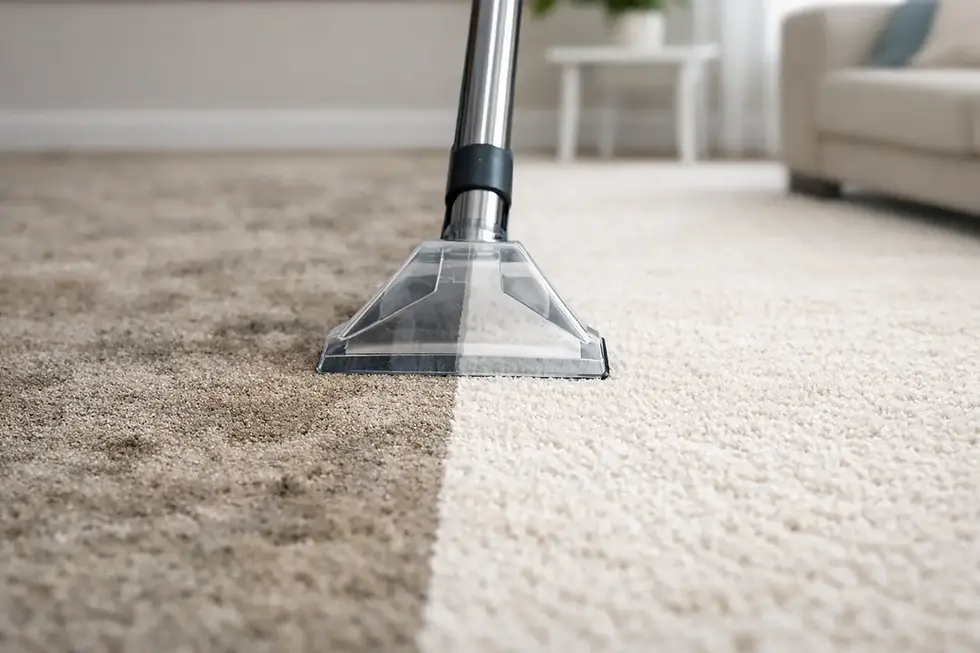
This is where professional cleaning becomes the safer, more economical option. A trained technician can identify fibre types, assess whether a stain is likely to be removable and select products and methods that suit the carpet rather than taking a one-size-fits-all approach. Professional extraction also removes loosened soil and cleaning residue more thoroughly than repeated spot treatments.
For families in Glasgow and Lanarkshire, AquaSweep can assess heavily used carpets, stubborn stains and lingering household odours with the right equipment and safety-conscious treatments. This is particularly useful before a new baby arrives, after a run of winter mud, or when a rented property needs to be brought back to a clean, presentable standard.
A cleaner carpet without over-cleaning it
A carpet does not need to smell heavily perfumed to be clean. In fact, low-odour products and proper drying are often a better sign that the job has been done well. Vacuum regularly with a machine suited to your carpet type, attend to spills promptly and use spot products only where they are needed.
Consider a professional carpet protector after a deep clean if your home has young children, pets or a particularly busy lounge. A good protector can give you more time to blot up spills before they bond to the fibres. It is not an invisible force field, though. Spills still need prompt attention, and protectors need reapplying after professional cleaning or as wear dictates.
The most reassuring choice is rarely the strongest bottle on the shelf. It is the product, method and level of care that match your carpet and your family. Keep your cleaning kit simple, treat accidents calmly and ask for expert help before a small mark becomes a permanent feature of the room.


Comments