

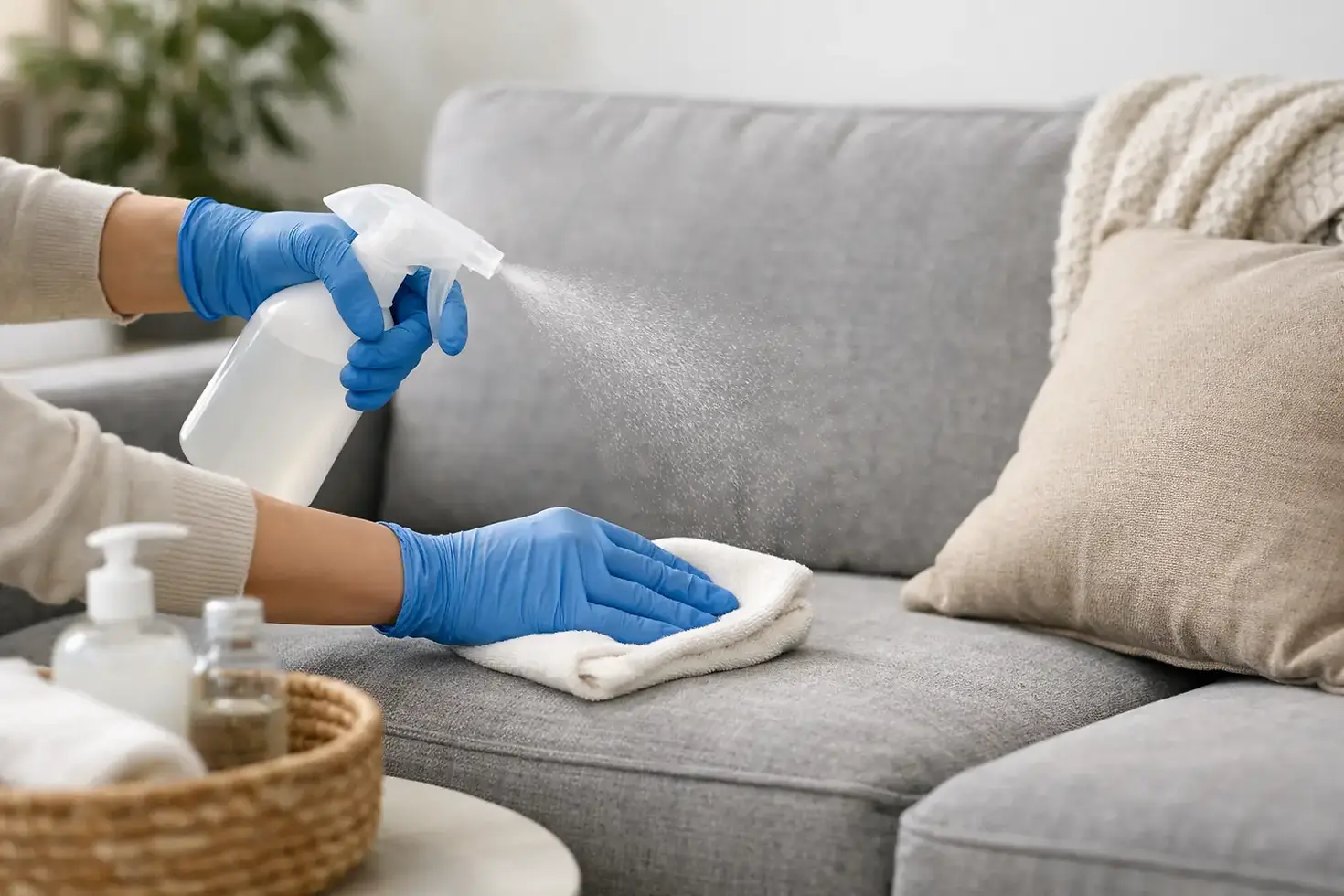
How to Sanitise Soft Furnishings Properly

A sofa can look perfectly clean while holding onto pet dander, food residue, body oils, dust and the source of that lingering odour you cannot quite place. Knowing how to sanitise soft furnishings properly helps you go beyond a quick surface freshen-up, without damaging fabric, leaving it soaking wet or filling the room with overpowering fragrance.
For homes with children, pets or allergy sufferers, the right approach makes a real difference. The same applies to rented properties, offices, waiting areas and other shared spaces where upholstered seating gets regular use. Sanitising should reduce the build-up of unwanted microbes and odours, but it needs to be matched carefully to the material and condition of the furnishing.
Cleaning, deodorising and sanitising are not the same thing
These terms are often used interchangeably, yet each does a different job. Cleaning removes visible soil, crumbs, dust and greasy residue. Deodorising targets smells, including pet odours and stale fabric smells. Sanitising uses an appropriate product or process to reduce bacteria and other microorganisms to safer levels.
One does not automatically guarantee the other. A scented spray may make a chair smell pleasant for an afternoon, but it will not remove the residue feeding an odour. Equally, applying a sanitising product over a dirty sofa is rarely effective because soil creates a barrier between the treatment and the fabric.
Start with cleaning, then apply a fabric-safe sanitising treatment if the care label and product instructions allow it. Sanitising is not the same as sterilising, and no home method can promise to remove every germ from every part of a heavily used piece of upholstery.
Check the fabric before you start
The care label is your best first reference point. It will usually include a cleaning code or clear instructions from the manufacturer. Fabrics that tolerate water-based cleaning generally offer more options than delicate materials such as silk, viscose, velvet or loosely woven natural fibres.
Before using any cleaner or sanitiser, test it on a small hidden section, such as underneath a seat cushion or at the rear of the furniture. Look for colour transfer, water marks, texture changes or stiffness once the area is dry. A product may be marketed for upholstery but still be unsuitable for your particular fabric or dye.
Take extra care with furnishings containing feather-filled cushions, antique upholstery, removable covers with uncertain shrinkage risk, or foam that absorbs water easily. In these cases, a light professional assessment is safer than trial and error with a bottle from the supermarket.
How to sanitise soft furnishings at home
For routine household care, work methodically and avoid soaking the fabric. Excess moisture can drive dirt deeper, cause water marks and create ideal conditions for musty smells if the item takes too long to dry.
Remove loose dirt first
Vacuum the whole item slowly using the upholstery attachment. Pay particular attention to seams, piping, under cushions, armrests and the gap where the backrest meets the seat. These are the areas where crumbs, hair and dust build up unnoticed.
If there is a fresh spill, blot it immediately with a clean white cloth. Do not scrub - rubbing can spread the stain and damage fibres. For dried stains, identify what caused them before choosing a treatment. Protein-based stains, drinks, grease and pet accidents all respond differently.
Use a suitable upholstery cleaner
Apply a fabric-appropriate cleaner according to its instructions, using the minimum amount needed. Work in manageable sections rather than treating the full sofa at once. A soft brush or microfibre cloth can help lift soil, but use gentle pressure and avoid aggressive brushing on delicate pile fabrics.
If you own an upholstery cleaning machine, do not assume more solution or repeated passes will create a better result. Controlled application and effective extraction are what prevent overwetting. The furnishing should feel only slightly damp afterwards, not saturated.
Apply a fabric-safe sanitiser
Once the fabric is clean, use a sanitising product specifically approved for soft furnishings. Follow its stated contact time - spraying and wiping it straight away may not allow the product to work as intended. Never mix cleaning chemicals, even if both products are familiar household brands.
Ventilate the room well, keep children and pets away until the item is dry, and avoid sitting on the furnishing during the treatment period. If anyone in the household has asthma, sensitive skin or fragrance sensitivities, choose products carefully and do not rely on heavily perfumed sprays to mask a problem.
Dry thoroughly and promptly
Open windows where practical, run gentle heating if needed and use fans to improve airflow. Stand removable cushions on their sides so air can circulate around both surfaces. Drying time depends on the fabric, room temperature and how much moisture was used, but the aim is always a quick, even dry.
Do not replace throws, cushions or seat covers until the fabric is fully dry. Covering damp upholstery can trap moisture and leave you with the very stale smell you were trying to remove.
Do not forget the soft furnishings around the sofa
Upholstery is only one part of the picture. Curtains, fabric dining chairs, footstools, scatter cushions, rugs, mattresses and upholstered headboards can all hold dust and odours. Treat them according to their individual labels rather than assuming one product is suitable for every item.
Machine-washable cushion covers and throws can often be cleaned separately, which is useful after illness, muddy paws or a household accident. Wash at the highest temperature permitted by the label, dry completely and sanitise the inner cushion only if its fabric and filling allow it.
For mattresses, avoid saturating the surface. Vacuum first, spot clean carefully and use a product designed for the job. A waterproof protector is often more valuable than frequent wet cleaning, especially in children’s bedrooms or rental properties.
Common mistakes that make upholstery worse
The biggest mistake is treating odour as a fragrance problem. Pet smells, milk spills and damp fabric odours need the source removed, not covered up. If the contamination has reached cushion foam, backing material or the underside of the furniture, a surface spray will have limited effect.
Another common issue is using too much water. This can leave tide marks, loosen adhesives, distort cushion fillings and delay drying. Heat can also cause trouble: high temperatures may set some stains or affect delicate fibres, so always follow the manufacturer’s care guidance.
Finally, avoid using bleach, washing-up liquid or all-purpose disinfectant unless the label specifically confirms it is safe for upholstery. These products may fade fabric, leave sticky residues that attract more dirt, or irritate skin once people sit on the treated surface.
When professional sanitising is the sensible choice
Home maintenance works well for light, regular care. Professional upholstery cleaning is the better option when there are widespread stains, strong pet odours, illness-related contamination, long-standing dirt or a valuable fabric you do not want to risk.
A trained technician can assess the fibre type, dye stability and level of soiling before selecting the right treatment. Industry-grade equipment removes soil and moisture more effectively than most domestic methods, helping furnishings dry faster and look fresher. Targeted odour treatments are particularly useful where the cause has penetrated beneath the surface.
For landlords and businesses, professional work also provides a more reliable standard between tenancies, after office incidents or ahead of inspections. At AquaSweep, specialist upholstery cleaning and sanitising treatments are tailored to the furnishing rather than treated as a one-size-fits-all job.
Keep soft furnishings fresher for longer
A simple routine prevents most problems from becoming expensive ones. Vacuum upholstered seating weekly in busy homes, deal with spills immediately and wash removable covers as directed. If pets use the sofa, a washable throw is far easier to maintain than repeatedly treating the full upholstery.
Consider a professional fabric protector after a deep clean where appropriate. It will not make a sofa indestructible, but it can give you valuable time to blot spills before they soak in. That small margin often makes the difference between a straightforward clean and a permanent mark.
The best time to sanitise soft furnishings is before the odour becomes part of the room. Regular care, safe products and a prompt professional clean when home methods are no longer enough will keep the spaces where your family, guests or customers sit feeling genuinely fresh.


Comments