

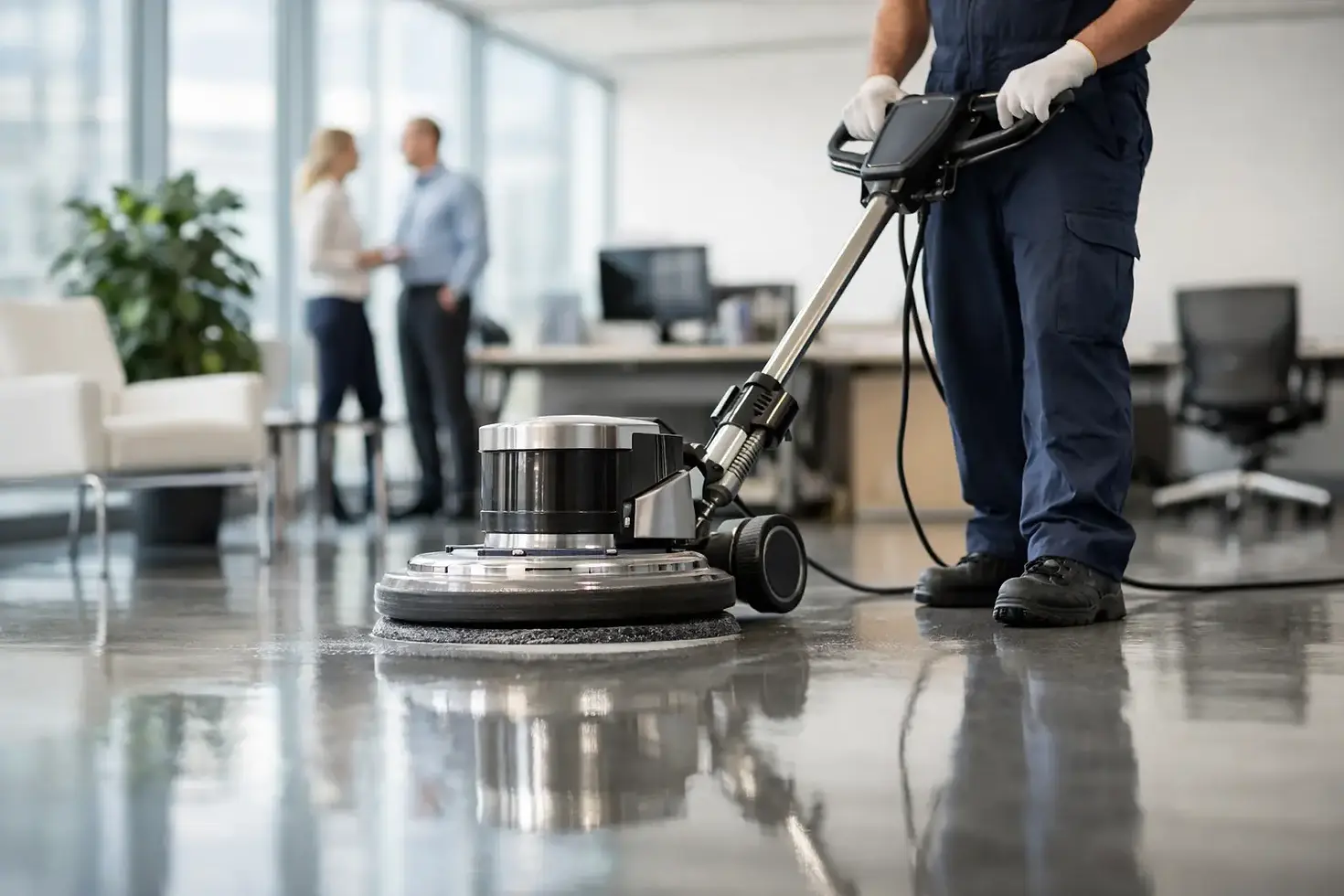
Office Floor Polishing Services for Glasgow Workplaces
- Carl

- 4 hours ago
- 5 min read
A dull reception floor can undermine an otherwise well-run workplace in seconds. Scuffs around doorways, ingrained soil near desks and a worn finish in communal areas are noticed by visitors, clients and staff alike. Professional office floor polishing services restore a clean, cared-for appearance while helping to protect the hard flooring beneath the surface.
For offices across Glasgow and the surrounding area, polishing is not simply about making a floor look glossy. The right process can extend the usable life of suitable flooring, support a safer working environment and make routine cleaning more effective. The key is matching the treatment to the floor type, its condition and how the space is actually used.
What office floor polishing services can achieve
Hard floors take a great deal of daily punishment. Grit brought in on shoes acts like an abrasive, while chair wheels, foot traffic, spills and unsuitable cleaning products can gradually leave the surface flat, scratched or patchy. In busy entrances, kitchens, corridors and meeting rooms, that wear can build up quickly.
A professional polishing service removes embedded surface soil, revives the appearance of compatible flooring and applies or restores a protective finish where appropriate. The result should be an even, professional-looking floor that is easier to maintain between scheduled cleans.
The visual improvement matters, but so does the practical benefit. A properly maintained finish helps reduce the amount of dirt that settles into the floor’s texture. It also provides a sacrificial layer that can be cleaned and renewed before permanent wear reaches the flooring itself.
Appearance, hygiene and first impressions
A polished floor gives reception areas and shared spaces a brighter, more organised feel. This is particularly valuable for offices that welcome customers, interview candidates, suppliers or visiting teams. It shows attention to detail without requiring expensive refurbishment.
Cleanable, well-maintained hard floors also support day-to-day hygiene. No floor treatment makes a workplace maintenance-free, but a sound finish allows cleaning teams to remove routine dust and spills more efficiently. That is useful in high-touch, high-traffic environments where standards need to stay consistent all week.
Not every hard floor should be polished the same way
This is where experience makes a real difference. “Hard floor” covers a wide range of materials, and each has different limits. Vinyl, linoleum, safety flooring, sealed stone and some tile floors may benefit from specialist cleaning, polishing or finish restoration. Other surfaces may need a gentler cleaning method, a specific sealant, or no polish at all.
Wood and laminate, for example, can be damaged by excessive moisture or the wrong chemical treatment. Natural stone may require a product designed for its particular composition. Safety flooring is intended to offer grip, so a high-shine finish is not always appropriate. The right outcome is not automatically the shiniest possible floor - it is a clean, even surface that remains suitable for the space and its safety requirements.
Before work starts, a trained technician should assess the flooring, identify previous coatings where possible and consider its current condition. They should also ask how the office operates. A quiet professional suite, a busy call centre and a public-facing premises will have very different traffic levels and scheduling needs.
A professional floor polishing process
Quality results begin with preparation. Polishing over loose grit, sticky residues or old, failing finish will only trap the problem beneath a new layer. A proper service is built around careful cleaning first, followed by the correct restoration treatment.
The process often includes a detailed inspection, edging work around skirting and corners, machine cleaning to lift accumulated soil, and removal of residues that dull the floor. If an old finish has broken down badly, it may need to be stripped back before a new protective coating is applied. For floors with a sound finish, a maintenance polish or burnishing treatment may be enough to revive the surface.
After treatment, the floor needs sufficient drying or curing time before normal foot traffic resumes. This is why flexible scheduling matters. Evening, early-morning or quieter-period appointments can help offices avoid unnecessary disruption while still giving the floor the time it needs to perform properly.
Why machine work matters
Mops are essential for daily upkeep, but they cannot always shift compacted dirt, heel marks and residue from cleaning products. Industry-grade rotary and floor-care machines apply controlled agitation and consistent pressure across larger areas. Used correctly, they produce a more even finish than a quick cosmetic clean.
The equipment alone is not the answer. Pad selection, cleaning solution, moisture control and machine speed all affect the result. An aggressive method on the wrong material can cause damage, while an overly mild approach may leave the floor looking unchanged. Skilled technicians know when each approach is appropriate.
How often should an office floor be polished?
There is no single schedule that suits every workplace. A small office with limited visitor traffic may only require periodic deep cleaning and finish maintenance. A busy reception, shared building entrance or office with regular deliveries may benefit from more frequent attention.
As a practical guide, watch for grey traffic lanes, a noticeably uneven sheen, stubborn marks that remain after routine cleaning, or a floor that seems to attract dirt immediately after being mopped. These are signs that the protective surface may be wearing down.
Regular maintenance is usually more cost-effective than waiting until the finish has completely failed. Light restorative work can preserve the existing coating, whereas neglected flooring may require more intensive stripping and reapplication. That said, frequency should always be based on floor condition rather than an arbitrary calendar date.
Choosing the right provider for your office
Price is naturally a consideration, but a low quote can be misleading if it does not include assessment, preparation or suitable products. Ask what flooring types the provider is experienced with, whether they can work around your opening hours and what level of disruption to expect.
It is also worth confirming how they manage slips, wet-floor signage and drying times. A polished floor should enhance presentation without creating an avoidable safety issue. A professional team will explain the process clearly, set realistic expectations and advise if a different treatment would be better for your flooring.
For businesses that need dependable results, AquaSweep provides specialist hard-floor cleaning with trained technicians, professional equipment and practical appointment options. The aim is not a short-lived shine for photographs, but a floor that looks presentable, cleans more easily and stands up better to everyday office use.
Getting more from your newly finished floor
Once the work is complete, simple habits protect the investment. Entrance matting reduces abrasive grit, prompt spill removal helps prevent staining, and neutral products chosen for the flooring type can prevent residues from building up. Avoid using harsh household chemicals or abrasive pads unless they have been approved for the finish.
Reception and entrance areas deserve particular attention because they carry the most dirt into the building. A small change in daily cleaning practice in these zones can noticeably extend the life of a professional polish.
A clean, well-finished office floor quietly does its job every day: it supports a better first impression, gives staff a more pleasant shared space and reduces unnecessary wear. If your hard floors are looking tired despite regular cleaning, a professional assessment is the sensible next step.

Comments