

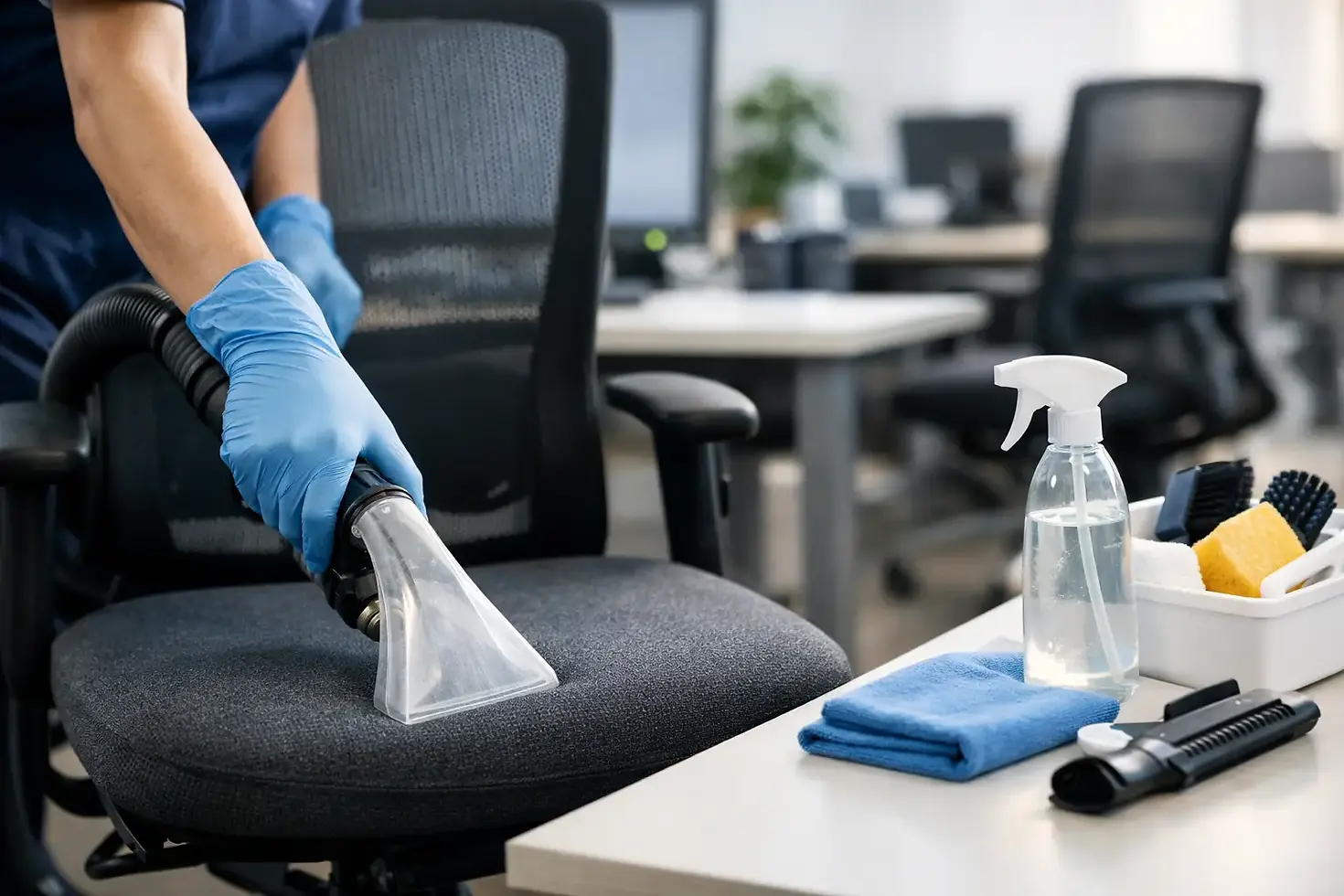
Office Upholstery Cleaning Checklist for Workplaces

A reception chair with a fresh coffee mark, meeting-room seats dulled by daily use and a lingering food smell in the breakout area can make an otherwise well-kept office feel neglected. This office upholstery cleaning checklist helps facilities managers, office managers and business owners keep fabric seating presentable, hygienic and ready for clients, staff and visitors.
Upholstered office furniture is easy to overlook because it does not show dirt in the same way as hard flooring. Yet chairs, booth seating, soft partitions and reception sofas collect body oils, dust, crumbs, spills and odours every working day. A planned approach prevents small issues becoming permanent stains or a costly replacement decision.
Start Your Office Upholstery Cleaning Checklist With an Audit
Before cleaning begins, walk through the workplace and record every upholstered item. Include desk chairs, visitor chairs, reception seating, meeting-room furniture, breakout booths and any fabric panels. Note the location, approximate age, fabric type where known and visible condition.
Photographs are useful for tracking wear and for showing what has changed after a professional clean. They also help identify which areas receive the heaviest use. A quiet executive meeting room may only need periodic maintenance, while reception seating and communal lunch spaces normally need more frequent attention.
Check manufacturer care labels or cleaning codes wherever possible. Not every fabric responds safely to the same method or product. Using too much moisture, applying an unsuitable spot treatment or scrubbing aggressively can leave water marks, cause colour loss or damage fibres. When the material is unknown, a discreet patch test should always come first.
The Practical Cleaning Checklist
Use the following checks as part of your regular office maintenance routine. The right frequency depends on footfall, shift patterns, food and drink policies, pets in pet-friendly offices and the type of business you run.
Inspect seats weekly. Look for fresh spills, stains, crumbs, loose dirt, odours and signs of wear, particularly on arms, headrests and front edges.
Vacuum fabric upholstery regularly. Use a suitable upholstery attachment to remove dry soil from seat cushions, backs, seams and crevices. Dry soil can become abrasive when left in the fibres.
Deal with spills immediately. Blot liquid with a clean, absorbent white cloth. Work from the outer edge towards the centre and avoid rubbing, which can spread the stain deeper.
Record recurring problems. Repeated coffee marks in one room or food odours around a particular seating area may point to a practical issue, such as a lack of tables or an unclear eating policy.
Keep cleaning products controlled. Do not leave general-purpose sprays for staff to use on chairs. Products that appear harmless can bleach fabric, leave sticky residue or make future cleaning harder.
Arrange periodic deep cleaning. High-use upholstery benefits from a professional clean before it looks heavily soiled. Preventive care generally produces better results than waiting for visible staining.
This routine does not need to create extra work for your team. A short weekly inspection, clear spill-response supplies and a simple reporting process are usually enough to keep issues under control between professional visits.
Respond to Spills Without Making Them Worse
Speed matters, but so does restraint. For tea, coffee, water-based drinks or fresh food spills, blot rather than rub. Replace the cloth or paper towel as it becomes saturated, so you are lifting contamination rather than pressing it back into the material.
Avoid soaking the area. Excess moisture can travel through the fabric into foam cushioning, extending drying time and potentially creating an unpleasant smell. It can also leave a visible ring when it dries. If a stain remains after blotting, record what caused it and arrange suitable treatment instead of experimenting with multiple household products.
For ink, oil, makeup, paint, chewing gum or old mystery marks, professional assessment is the safer option. Stain removal is never identical from one chair to another. The result depends on the fibre, dye stability, age of the stain and any previous products applied to it.
Protect Staff Comfort, Hygiene and First Impressions
Office upholstery cleaning is not solely about appearance. Soft furnishings can hold allergens, dust and odours, especially in enclosed meeting rooms or busy shared workspaces. Regular vacuuming and periodic specialist cleaning support a fresher working environment without disrupting your whole operation.
Prioritise high-contact areas after illness outbreaks, seasonal sickness or periods of heavy occupancy. Sanitising can be useful where there is a genuine hygiene requirement, but it should be selected for the fabric and the situation rather than treated as a one-size-fits-all extra. The goal is clean, safe seating with appropriate products and sensible drying times.
For client-facing businesses, reception furniture deserves particular attention. Visitors may not notice a freshly cleaned chair consciously, but they will notice dull fabric, unpleasant odours or obvious stains. Clean seating quietly reinforces the standards behind your service.
Plan Cleaning Around Your Working Hours
A professional upholstery clean should fit around your business, not bring it to a halt. Before booking, identify the rooms that can be released first, the number of seats involved and whether furniture can be moved easily. This makes it easier to schedule the work in stages or outside core hours.
Drying time varies according to fabric, room temperature, ventilation, soil level and the cleaning process required. There is a trade-off here: a quick refresh may suit a lightly used chair, while heavily soiled reception seating may require more detailed treatment. A trained technician should explain the expected results and practical aftercare before work starts.
Open windows where appropriate, maintain comfortable room temperature and allow airflow after cleaning. Avoid returning chairs to full use until they are dry enough for normal occupancy. Planning this detail prevents damp clothing, marked cushions and frustrated staff.
Know When Routine Cleaning Is Not Enough
Your in-house checklist is designed for maintenance, not for every problem. Arrange professional upholstery cleaning when seating has widespread staining, persistent odours, visible dullness, embedded dirt or a build-up of marks around arms and headrests. It is also a sensible step before an office move, a landlord inspection, a refurbishment handover or an important client event.
Professional equipment and trained technicians can remove much more embedded soil than routine vacuuming alone, while using methods matched to the furniture. They can also advise whether fabric protection is worthwhile after cleaning. Protectors can make it easier to blot future spills, but they are not a substitute for prompt action and routine care.
If several pieces of furniture have reached the same point of wear, book them together where practical. Treating a complete reception or meeting room produces a more consistent finish than cleaning one visibly stained chair at a time.
Keep a Simple Upholstery Care Record
A short record makes the checklist far more effective. Note inspection dates, reported spills, treatments used, professional visits and any chair that is removed from service. This gives your cleaning provider useful context and helps you spot patterns before they become expensive.
For larger offices, assign responsibility to a named facilities contact. For smaller workplaces, a shared digital log or a simple checklist in the cleaning cupboard is usually enough. The important point is that staff know who to tell when a spill happens and that problems are not left until the next annual clean.
Well-maintained office seating lasts longer, feels better for employees and presents your business properly from the moment someone walks through the door. When your chairs need more than a quick vacuum and blot, a specialist visit can restore the clean, professional finish your workplace deserves.


Comments